
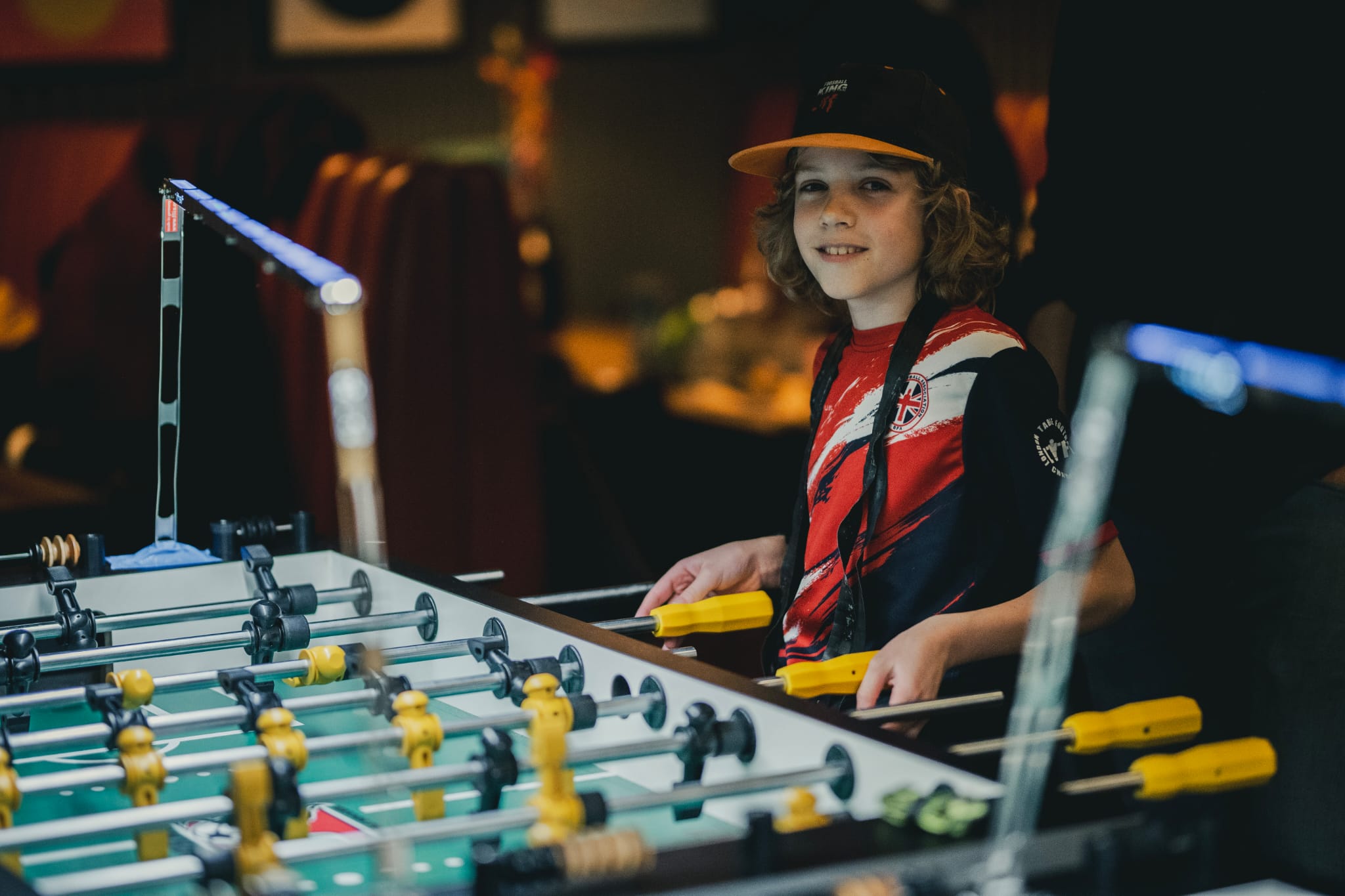
Why Table Football Deserves a Place in Youth Clubs
Walk into a youth club with a table football table and you might find a close match, a lively debate about who’s playing next or four young people who have completely forgotten to check their phones.
At its best, a table becomes somewhere people naturally gather. There’s something to do, someone to play with and a good reason to come back next week.
At the British Foosball Association, we want more young people to have that opportunity. Table football offers a fun way to spend time together, learn something new and feel part of a group.
And getting started can be as simple as asking, “Who wants a game?”
An easy way to join the group
Arriving at a youth club for the first time can feel daunting. Other people already know each other, and walking into a conversation isn’t always easy.
A game gives a newcomer a way in.
They can watch for a few minutes, join someone in doubles or ask how to play. There’s an immediate shared interest, without the pressure of having to think of something interesting to say.
For youth workers, inviting someone to join a game can also provide a relaxed introduction. You can explain the basics, introduce a teammate and help them settle in while everyone has something to focus on.
Something worth putting the phone down for
Young people have plenty of entertainment available on their screens. An activity has to be enjoyable in its own right if it’s going to hold their attention.
Table football has immediate action, friendly competition and the appeal of another go.
A shot hits the post. Someone makes an unexpected save. A team comes back from three goals behind. Everyone around the table experiences those moments together.
It gives young people a chance to enjoy face-to-face play, with reactions and conversations happening naturally around the game.
The phone may still come out for a photo of the winners. Fair enough.
Different ways to find your place
Some young people will want to learn clever shots. Others will enjoy teaming up with friends or organising a small competition.
There’s room for all of those interests.
The basics are quick to pick up, while the skill involved gives enthusiastic players something to work towards over time. A beginner can enjoy their first goal on the same evening that a more experienced player is practising a new pass.
Mixing up doubles partnerships helps different people play together. Pairing an experienced player with someone new can also give them a chance to explain, encourage and share what they know.
A place to practise being a good teammate
Doubles provides plenty of opportunities to support someone else.
Players share the celebrations and have to work through mistakes together. A missed save calls for encouragement. A close defeat offers a chance to congratulate the other team and try again.
Youth workers can help establish that atmosphere by noticing good teamwork as well as good goals.
A simple “You really helped your partner there” shows that patience and kindness count too.
Competition can be exciting without every match becoming an argument about who let the side down.
Let young people help shape the sessions
Giving young people a say in how the table is used can make it feel like their activity.
They could help organise a weekly doubles night, welcome beginners, keep track of a friendly league or come up with team names. Expect considerable enthusiasm for that last task.
Simple arrangements help everyone get a turn. Short matches, a clear queue and regular changes of partner can prevent a small group from dominating the table.
Occasional beginner sessions or skill challenges can add variety without making every evening a tournament.
Make the setup welcoming
A table works best when people can use it comfortably and safely.
Think about table height, reach and the space needed for rods and players. Keep walkways clear, maintain the equipment and consider the access needs of the young people attending.
A reliable table with smooth rods and a level playing surface makes learning more enjoyable. It’s frustrating to practise a pass when the ball keeps rolling away by itself.
Agree a few clear expectations about taking turns, treating people respectfully and looking after the equipment. Then leave plenty of room for fun.
Give them a reason to come back
A table football table can become a regular meeting point: somewhere young people catch up, make friends and discover something they enjoy getting better at.
Some may eventually want to visit a club or try a competition. Others will simply look forward to their weekly games with friends.
Both are worthwhile outcomes.
If you’re interested in introducing table football at your youth club, contact the British Foosball Association to discuss getting started and possible local connections.
The first game might last a few minutes. The friendships could last much longer.


