
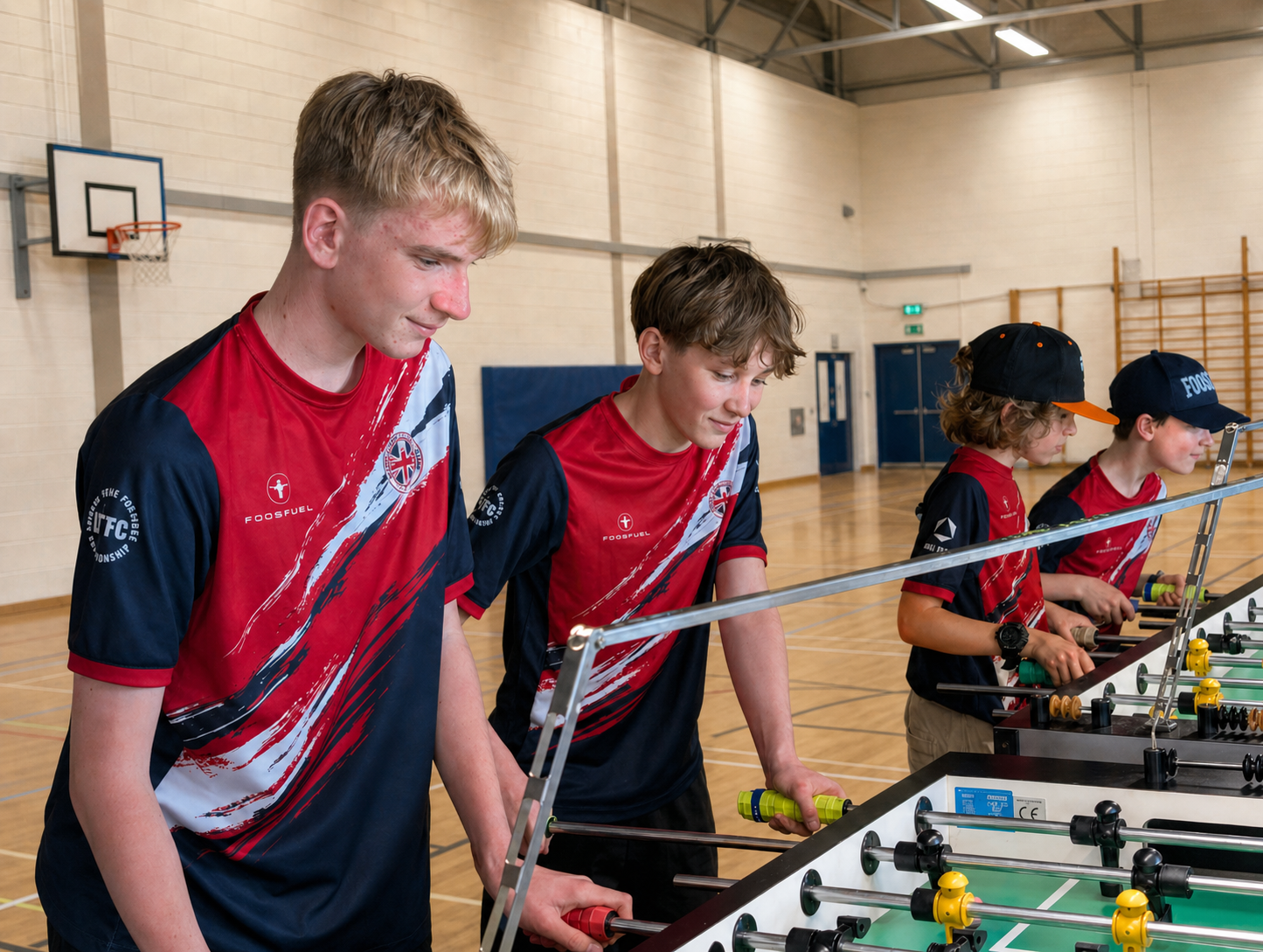
Beyond the Screen: Getting Kids into Table Football
“One more game?”
It’s a familiar request in plenty of households. But this time, there’s no controller, tablet or television involved. Just a table, a ball and a child who has decided they absolutely must beat you before bedtime.
Table football gives children something fun to get stuck into away from a screen. It’s hands-on, sociable and easy to start, with enough challenge to keep things interesting long after those first few goals.
At the British Foosball Association, we’d love more young people to discover it. And more parents to find out how much fun it is to join in.
Something worth putting the tablet down for
Screens are part of everyday life, and persuading children to do something else isn’t always straightforward. It helps when the alternative is something they actually want to do.
Table football gets everyone involved straight away. There’s a ball to chase, a goal to defend and somebody on the other side of the table enjoying it with you.
You’re sharing the same experience, reacting to the same unlikely goals and laughing at the same spectacular misses. The phone can wait. There’s a rematch to organise.
The first goal doesn’t take weeks of practice
Children don’t need to master complicated techniques before they can enjoy table football.
A few simple pointers are enough to get started: how to move the players, how to strike the ball and which goal you’re aiming for. That last one may still go wrong occasionally. It happens to the adults too.
Start with short, relaxed games and introduce more of the rules as everyone gets comfortable. Early on, the aim is to help children enjoy playing and want to come back.
There’s plenty of time for perfect passes later.
Little challenges that keep them interested
Once the first few goals have gone in, children often start setting themselves challenges without even realising it.
Can I stop the ball instead of hitting it straight away? Can I pass it to another row? Can I save that shot next time?
Table football gives them chances to practise coordination, concentration and making decisions as the game unfolds. They can try something, see what happens and have another go.
And when a move finally works, the satisfaction is immediate. You’ll probably hear about it for the rest of the day.
Learning to be a good teammate
Doubles brings another element to the game: someone else is relying on you.
Children get to practise encouraging a partner, sharing the celebrations and handling the moments when things don’t go to plan. A missed save becomes an opportunity to say, “Don’t worry, we’ll get the next one.”
There are lessons in winning and losing too. Congratulating an opponent, accepting a close defeat and staying kind when you’re ahead are all part of learning to play well with others.
Adults can help set that tone. Yes, even when you’ve just lost to a nine-year-old.
A family activity the adults can enjoy too
Some children’s activities require adults to supervise from the sidelines. Table football gives you a handle and puts you straight into the action.
Team up with your child, challenge them to a friendly match or let them teach you something they’ve worked out. Swap partners so everyone gets a chance to play together.
Keep the atmosphere light and celebrate a good effort or clever idea as much as a goal. If there’s a big difference in ability, try giving the newer player a head start or mixing up the doubles teams.
The best result is everyone wanting another game.
Give them a chance to discover it
You don’t need to buy a table before finding out whether your child enjoys playing. Look for somewhere nearby with a table, or contact a club to ask about suitable sessions for younger players.
Check the age arrangements and supervision requirements before visiting, then go along ready to have a go together.
The British Foosball Association can help you explore places to play and ways to get involved.
You might be introducing your child to a new hobby. You might also be introducing yourself to a surprisingly determined new rival.


